
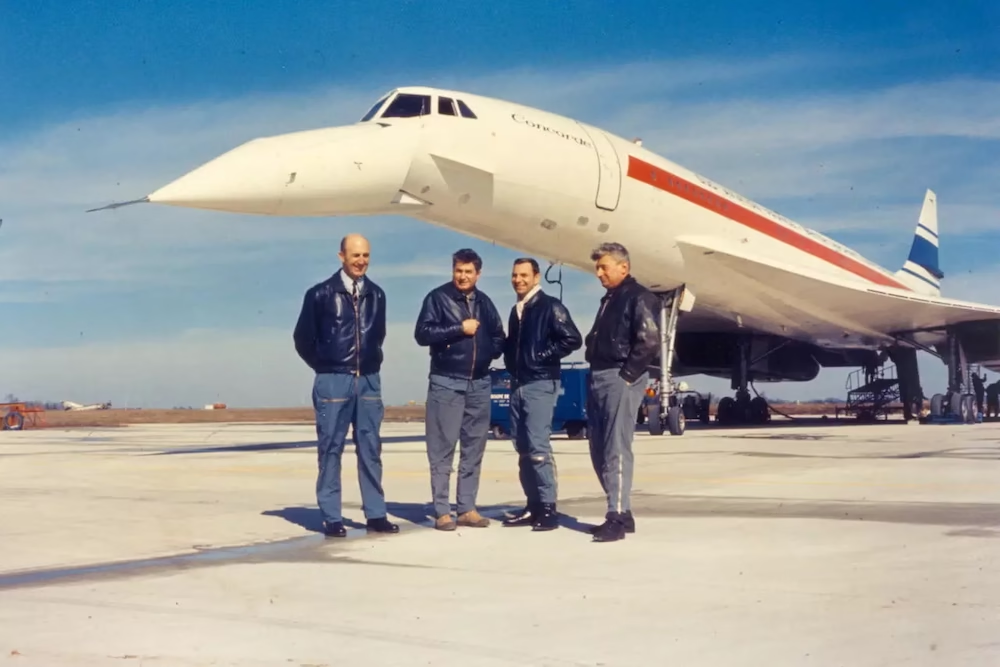
In the pantheon of aviation pioneers, few names resonate with the same quiet gravity as André Turcat. As Concorde’s chief test pilot, Turcat stood at the intersection of bold innovation and real-world risk, embodying the soul of a project that aimed to redefine the limits of commercial flight.
Follow Aeronews on Facebook, Twitter, LinkedIn, Bluesky and TikTok
While the sleek, delta-winged shape of Concorde has become an enduring symbol of technological elegance and ambition, it was Turcat’s steady hand, relentless discipline, and unshakable vision that first shepherded the supersonic airliner from concept to sky. His role was not merely mechanical; it was profoundly human. As Concorde’s chief test pilot, Turcat stood at the intersection of bold innovation and real-world risk, embodying the soul of a project that aimed to redefine the limits of commercial flight.
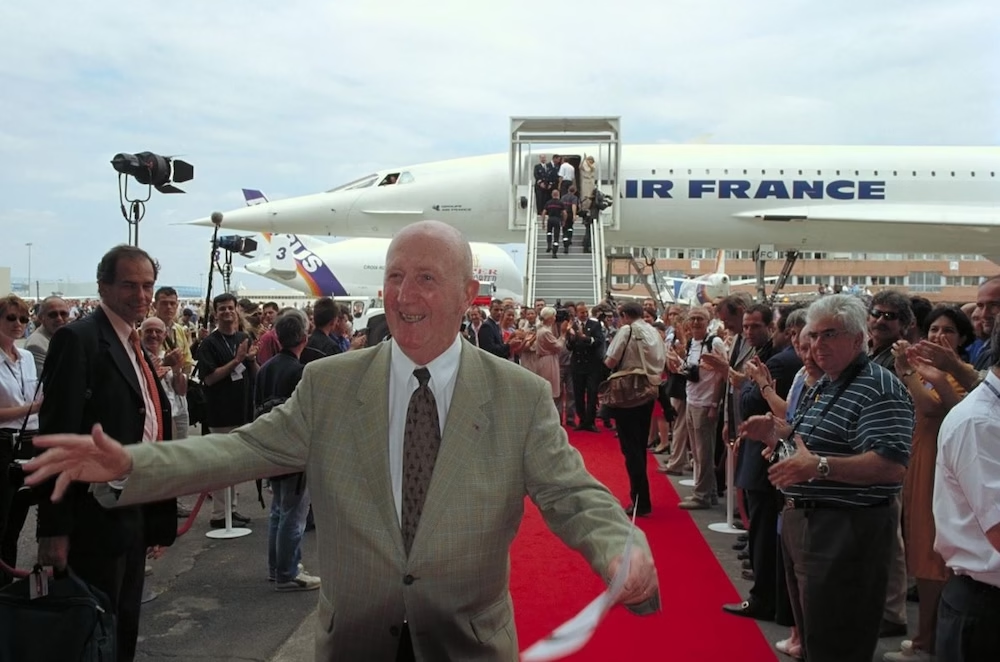
The man behind the controls
Born in Marseille in 1921, Turcat was a man of uncommon intellect and humility. A graduate of France’s prestigious École Polytechnique and a decorated pilot during World War II, he brought both a scientist’s mind and a warrior’s calm to the cockpit. His post-war career included significant work with experimental aircraft, but it was in the 1960s, as the head test pilot for Sud Aviation, that he was entrusted with one of the most audacious aeronautical undertakings of the 20th century: the Concorde.
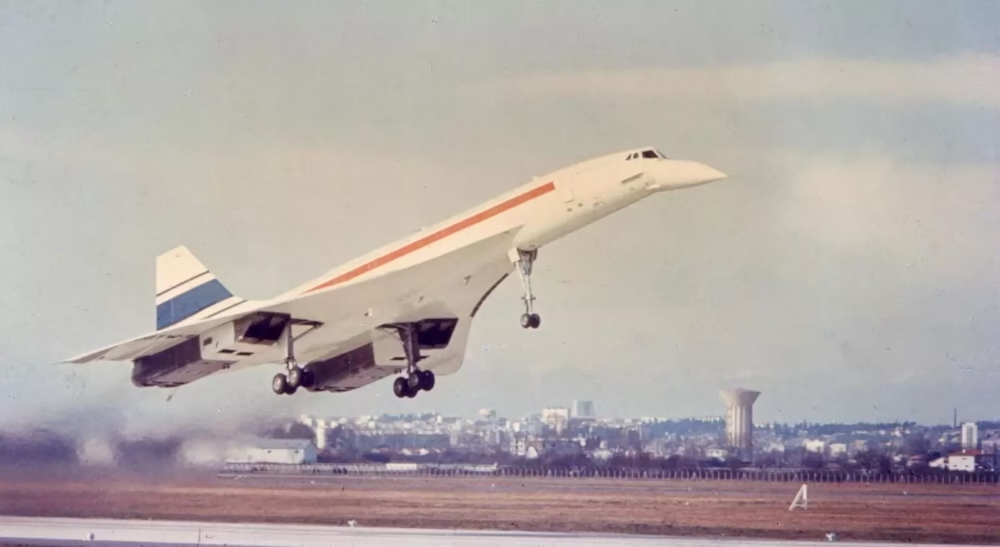
On March 2, 1969, Turcat climbed into the cockpit of Concorde 001 in Toulouse. It was a gray, overcast day, perhaps symbolically modest for what would become a luminous chapter in aviation history. At precisely 3:40 PM, Concorde left the ground for the first time. The flight lasted 29 minutes — a tentative yet monumental step into a new era of air travel. Turcat later reflected on the event with characteristically restrained confidence: “It flew like a bird.”
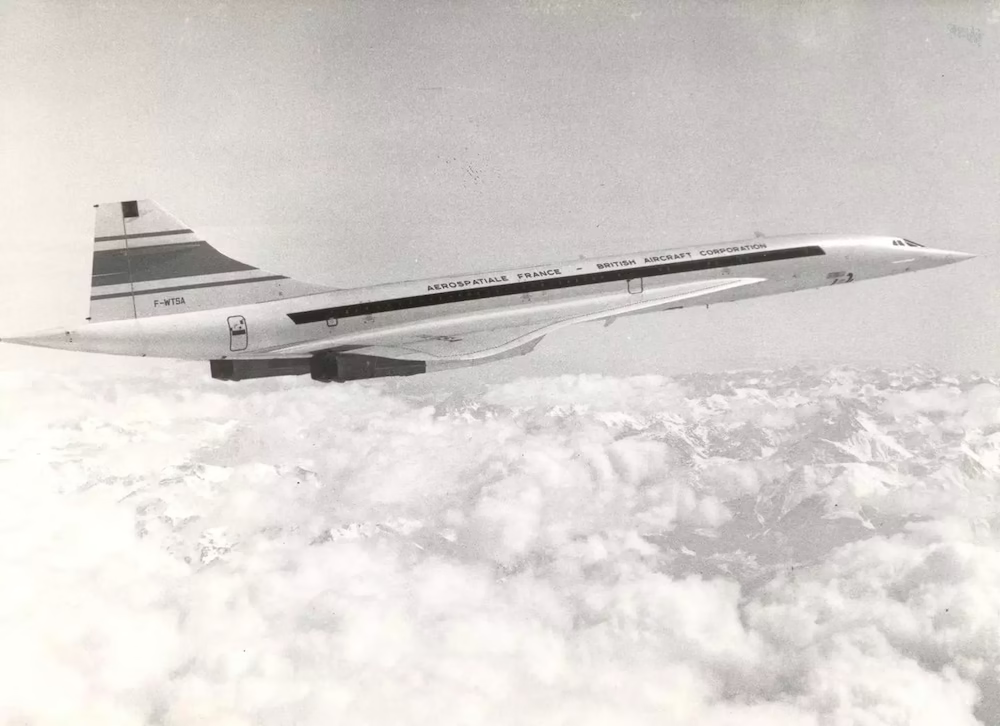
Supersonic milestone
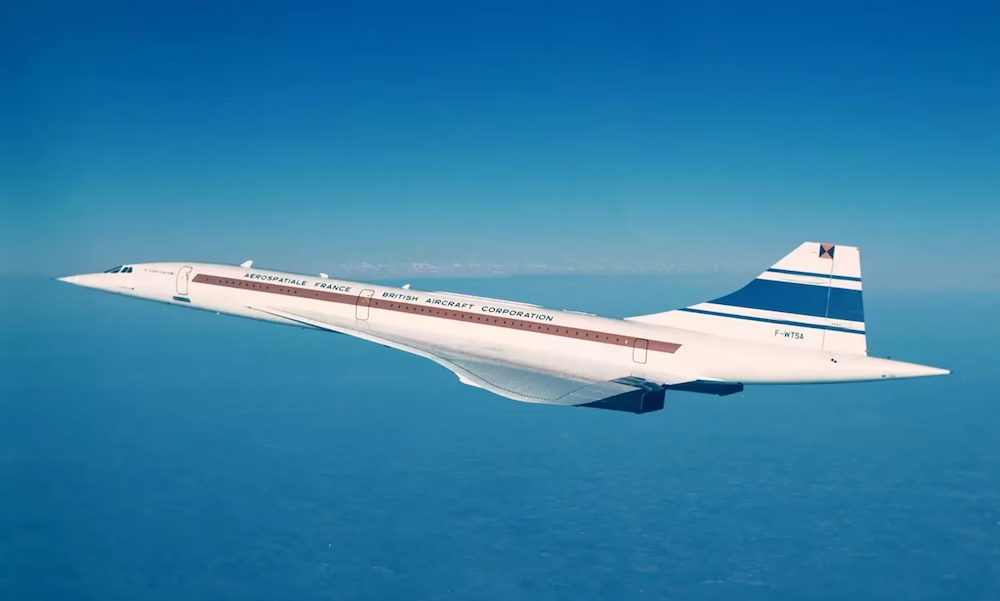
That first flight was just the beginning. Over the next months and years, Turcat and his team pushed Concorde further and faster. On October 1, 1969, he piloted Concorde through the sound barrier for the first time, reaching Mach 1 — a threshold that had previously been the exclusive domain of military jets. The achievement was not simply a test of speed, but a proof of possibility: that supersonic commercial travel could be smooth, safe, and within reach.
Turcat’s approach to flight testing was methodical, almost philosophical. He viewed the pilot not merely as a technician, but as a communicator between machine and engineers. His meticulous notes, calm demeanor, and encyclopedic understanding of aerodynamics provided invaluable feedback to the engineers shaping Concorde’s complex systems. He was, in many ways, the aircraft’s translator — interpreting its behavior in real time, diagnosing its needs, and relaying insights that would guide its evolution.
More than a pilot
But Turcat’s contributions transcended the cockpit. He was a public advocate for aviation progress, an author, and later, a member of the French Parliament. In all roles, he remained committed to the idea that aviation was more than transport — it was a vehicle for human advancement. While Concorde was ultimately retired in 2003, its legacy lives on in part because of Turcat’s foundational work.
He received numerous honors in his lifetime, including the prestigious Ivan C. Kincheloe Award from the Society of Experimental Test Pilots and induction into the French Academy of Air and Space. Yet he remained famously modest about his role, often redirecting praise toward the teams of engineers, mechanics, and fellow pilots who brought Concorde to life.
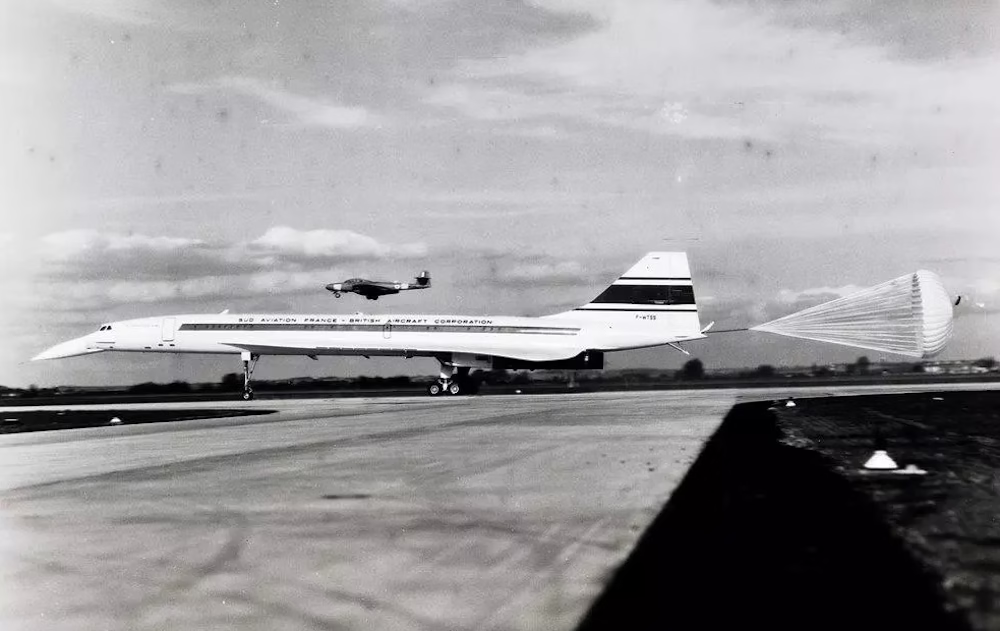
Andre was the founder and first president for the Académie nationale de l’air et de l’espace (ANAE) in 1983. The Academy is known as Académie de l’Air et de l’Espace since 2007. Turcat was also present on-board the Air France Concorde (F-BVFC) during its retirement flight, on 27 June 2003, to the Airbus plant at Toulouse, where the French aircraft was built. He was an author and wrote several books. Among the latest are: Concorde essais et batailles (1977) and Pilote d’essais: Mémoires (2005), both in French.
In 1998, Turcat was inducted into the International Air & Space Hall of Fame at the San Diego Air & Space Museum.
His legacy in the sky
Today, as the aviation industry once again turns its gaze toward supersonic travel — with new players like Boom Supersonic and NASA’s X-59 project — André Turcat’s legacy offers both inspiration and a blueprint. His life reminds us that at the cutting edge of technology, human judgment, courage, and curiosity are irreplaceable. Concorde may no longer streak across the Atlantic at Mach 2, but the echo of its first supersonic flight — and the pilot who made it possible — still stirs the skies.
In a field driven by speed and spectacle, Turcat’s enduring contribution was something subtler but no less powerful: trust. Trust in the machine, trust in the process, and trust in the future.
And that, perhaps, is the highest flight of all.
Photos: Airbus.