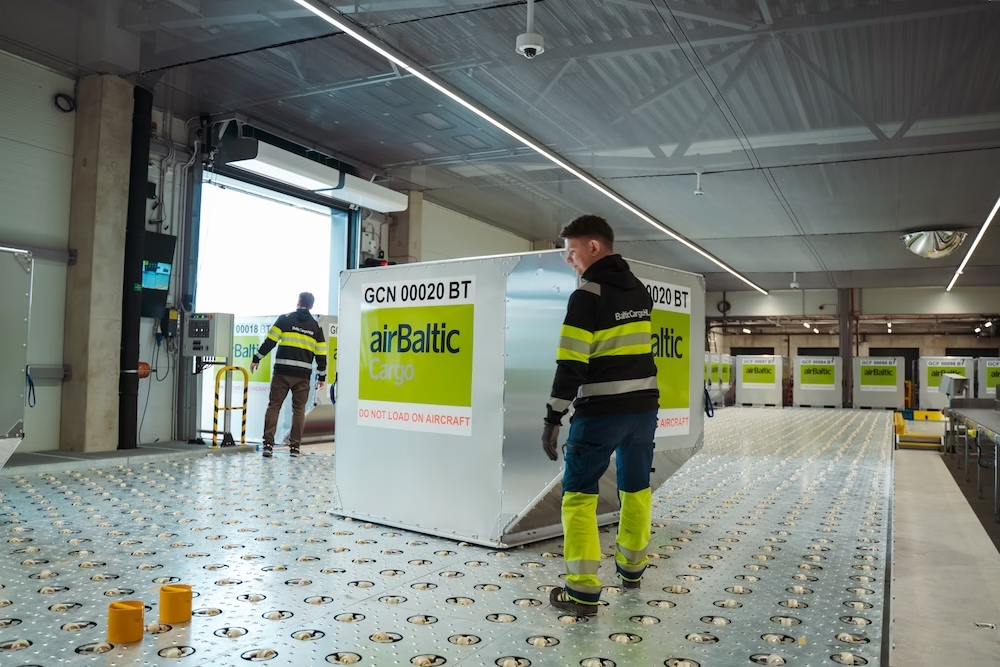

On May 22nd, during a dedicated ceremony, airBaltic, together with its key stakeholders, officially opened the new Baltic Cargo Hub at RIX Riga Airport – one of the largest air cargo handling facilities in the Baltics.
Follow Aeronews on Facebook, Twitter, LinkedIn, Bluesky and TikTok
Spanning 6 895 m², the Baltic Cargo Hub is designed to support the growing demand for efficient and modern air cargo services at RIX Riga Airport. Located directly at cargo apron and equipped with advanced semi-automatic material handling systems, the facility will enable swift and seamless cargo processing. It features such unique features as temperature-controlled rooms for sensitive materials – pharmaceuticals, as well as dedicated areas for dangerous goods, live animals, and valuables. Integrated Food and Veterinary Service facilities and a Customs checkpoint will further streamline cargo operations.
The Baltic Cargo Hub also highlights airBaltic’s strong commitment to sustainability. Throughout the construction process, Building Information Modeling (BIM) was utilized to optimize efficiency, and the facility meets BREEAM sustainability standards, setting a new benchmark for environmentally responsible development in the aviation industry.
Developed in close collaboration with leading industry partners, the project saw UPB Nams managing the construction works, the Ozola un Bula Architect Office providing architectural design, and BLV Advisory Group overseeing technical supervision.
Pauls Cālītis, Interim CEO and COO of airBaltic: “The opening of the Baltic Cargo Hub marks a major milestone in strengthening the air cargo infrastructure in the region. This state-of-the-art facility will significantly increase cargo handling capacity at the Riga Airport – up to 45 000 tonnes of cargo annually – and is open to all carriers looking to expand in the Baltics. For airBaltic, it provides an opportunity to further develop our cargo services and support our role in international logistics. It is not only a step forward for our operations, but also a meaningful boost to Latvia’s role as a key aviation hub in Northern Europe.”