
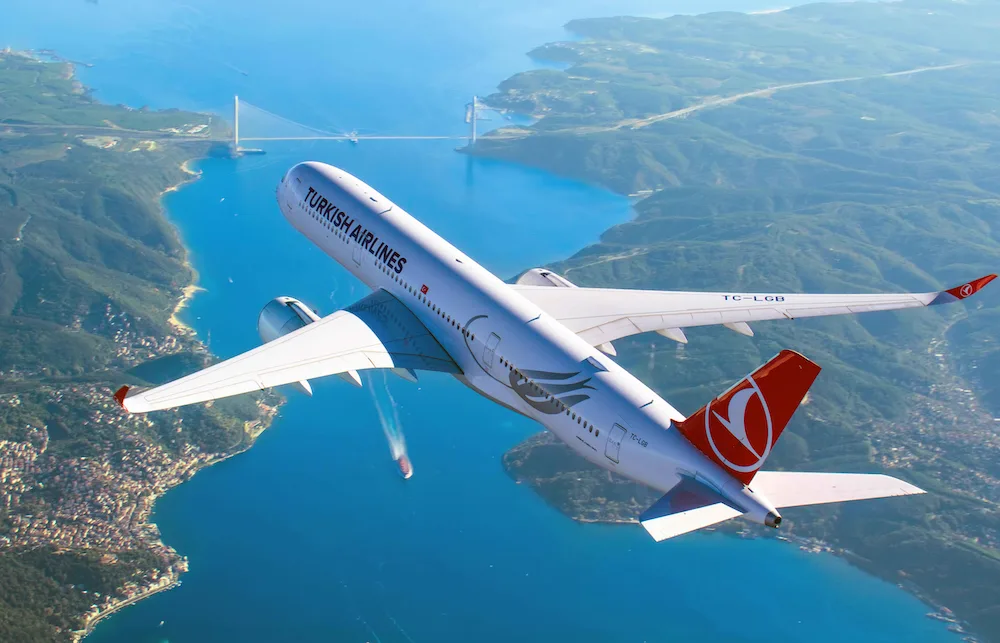
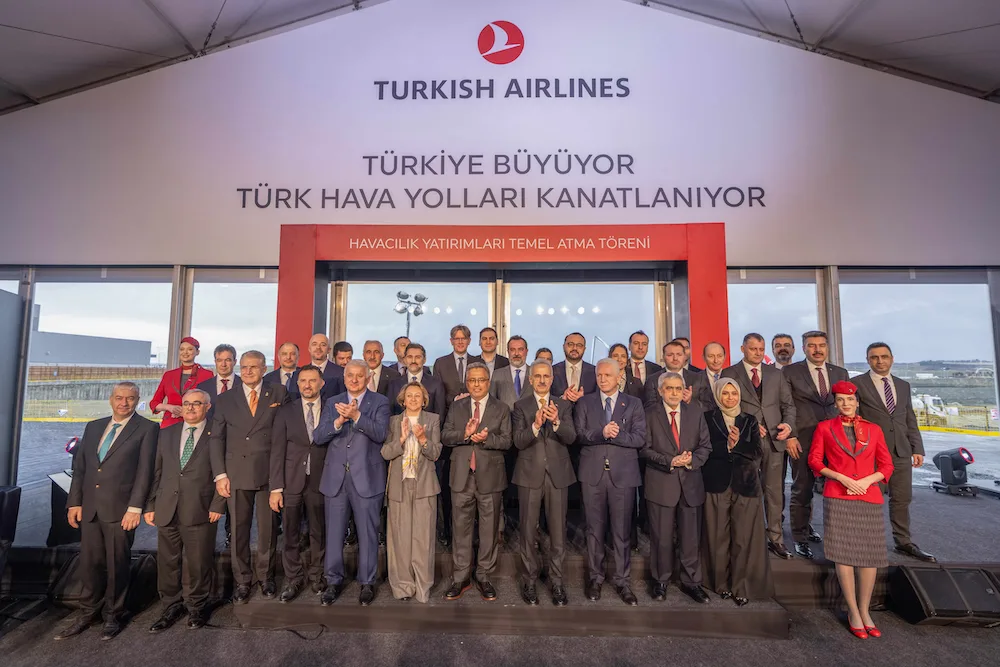
As part of this strategic move, shaped in line with the national flag carrier’s 2033 vision, groundbreaking ceremonies were held for 8 new facilities with a total investment value exceeding TRY 100 billion at several locations, primarily Istanbul Airport.
Follow Aeronews on Facebook, Twitter, LinkedIn, Bluesky and TikTok
These investments form the foundation of an integrated growth model that advances operational capacity, technical infrastructure, and digital capabilities in line with Turkish Airlines’ 2033 objectives to become one of the world’s 5 largest fleets as the carrier celebrates its centennial.
The ceremony held at Istanbul Airport was attended by the Minister of Transport and Infrastructure of the Republic of Türkiye Abdulkadir Uraloğlu, Turkish Airlines Chairman of the Board and the Executive Committee Prof. Ahmet Bolat, senior executives of Turkish Airlines and its subsidiaries, and leading figures in Turkish aviation.
Commenting on the new investments, Turkish Airlines Chairman of the Board and the Executive Committee Prof. Ahmet Bolat said: “In line with our 2033 targets, we are developing not only our fleet but also the robust infrastructure that will allow us to fully utilize this fleet. This investment initiative, exceeding TRY 100 billion and spanning from our cargo operations to our technical maintenance capacity, from our catering centers to integrated operational solutions, strengthens our global competitiveness and is a concrete evidence of our vision to make Türkiye one of the world’s foremost aviation hubs. These investments, which will provide 26,000 new jobs in 2026, will increase to 36,000 when all phases are completed. With these steps, we are building not only facilities but also an ecosystem for the future of our country’s economy and aviation sector. Today, our company’s contribution to our country’s economy is USD 65 billion, and when we reach our 2033 goals, this figure will reach USD 144 billion.”
As part of its new investments, Turkish Airlines is implementing the following projects to maintain global leadership in Cargo, Technical Maintenance, and Catering:
Turkish Cargo SmartIST Phase 2 project, which will be one of the world’s largest air cargo centers with an annual capacity of 4.5 million tons and is planned to be completed gradually during the 2027-2028 period.
Turkish Airlines Main Catering Facility, positioned as one of the world’s largest inflight catering centers with the capacity to serve more than 500,000 passengers per day and expected to become operational during the 2027-2028 period.
Turkish Technic Engine Maintenance Center, set to be completed in 2027, as one of Europe’s largest new-generation aircraft engine maintenance centers possessing the capability of servicing Trent XWB-84, Trent XWB-97 and Trent 7000 Rolls Royce engines.
Moreover, additional Aircraft Maintenance Hangars to be built under Turkish Technic and planned for completion within 2026 will create a simultaneous maintenance capacity for 12 aircraft, increasing the company’s current maintenance capability by an average of 20%.
E-Commerce Complex, a key element in the logistics and digital transformation vision and planned to enter service within 2026, further strengthens Turkish Airlines’ role in global trade through Widect, its new-generation operational model offering “door-to-door integrated cargo solutions.”
Istanbul Data Center, which will form the digital backbone of operational continuity and is planned to become operational during the 2027-2028 period, will elevate the company’s technology capacity to a new level with its high-security infrastructure and advanced data management capabilities, while Flight Training Center (Phase 1), scheduled for the 2026-2027 period, is positioned at the center of human resource investments, supporting
Turkish Airlines additional Crew Terminal Building, planned in line with the expanding operational volume and scheduled for completion within 2026, is included among the investments as a complementary infrastructure element that provides seamless logistics flow between ground services, maintenance, and flight operations.