
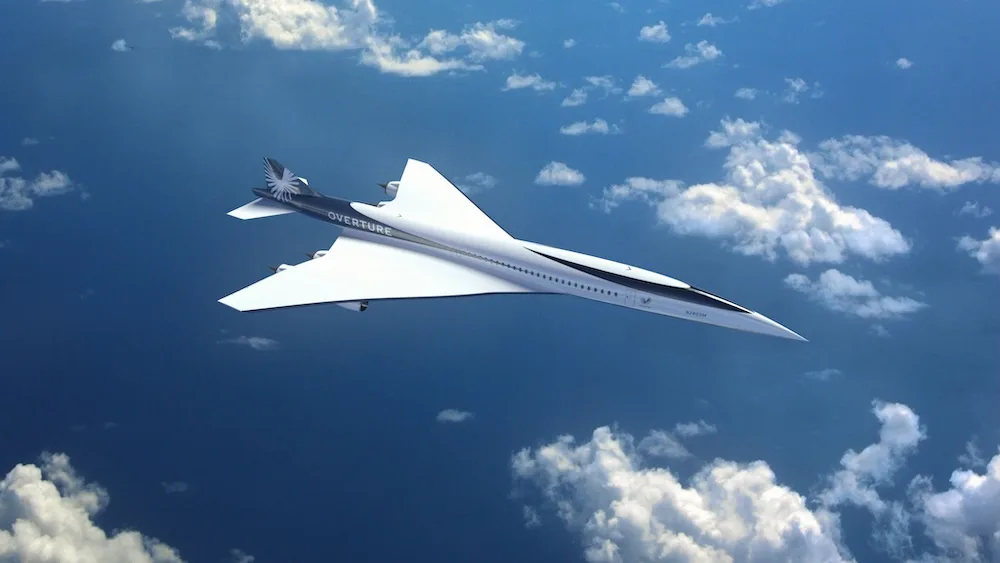
U.S. Transportation Secretary Sean P. Duffy announced that the Federal Aviation Administration (FAA) is taking a pivotal step toward enabling civil supersonic flights over the continental United States.
Follow Aeronews on Facebook, Twitter, LinkedIn and TikTok
The proposed rule sets a noise-based certification standard for supersonic aircraft. In addition to this first rule, the FAA plans to propose another rule later this year, establishing landing and takeoff noise standards for supersonic aircraft. The FAA aims to finalize both rules by mid-2027. Together, these actions will give manufacturers the guidance they need to finalize their designs.
Thanks to massive innovations in supersonic technology, it will be possible to safely operate these innovative aircraft without a sonic boom. When operational, next-gen supersonic planes will drastically reduce travel times–enabling faster movement of people and goods.
“Restoring supersonic flight over land isn’t just about speed, it’s about unleashing American innovation and ushering in a Golden Age of Travel,” said U.S. Transportation Secretary Sean P. Duffy. “Thanks to President Trump’s leadership , we are working at lightning speed to safely enable the next quantum leap in aviation technology and deliver an exciting new way to fly to the American flying public.”
Aircraft flying at supersonic speeds – Mach 1 and above – are traveling approximately 770+ miles per hour. Commercial airlines generally fly between 550 and 600 miles per hour.
One key to enabling supersonic travel is reducing the noise experienced by sonic booms. One means of achieving this is using a flight technique called Mach cutoff where the aircraft design, atmospheric conditions, speed, and altitude work in combination to ensure the sonic boom bends and refracts back into the atmosphere, significantly reducing its ground-level impact.
The FAA is collaborating with the International Civil Aviation Organization (ICAO), NASA, as well as industry and academic institutions and applying their research to inform supersonic noise standards.