
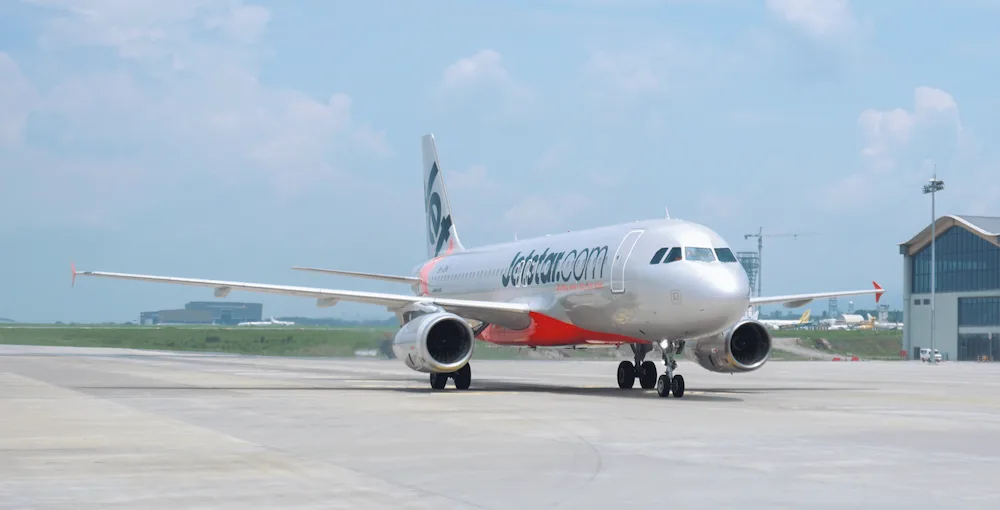
Jetstar Asia, the Group’s Singapore-based low-cost subsidiary, has faced growing challenges in recent years and the decision has been made, together with majority shareholder Westbrook Investments, to close the airline.
Follow Aeronews on Facebook, Twitter, LinkedIn, Bluesky and TikTok
Jetstar Asia will continue to operate flights on a progressively reduced schedule, before its final day of operation, on 31st July 2025.
Jetstar Asia customers with existing bookings on cancelled flights will be offered full refunds and the Group will look to reaccommodate customers onto other airlines where possible. All affected Jetstar Asia employees will be provided redundancy benefits as well as employment support services. Qantas is also actively working to find job opportunities across the Group and with other airlines in the region.
Despite delivering exceptional customer service and operational reliability, Jetstar Asia has been impacted by rising supplier costs, high airport fees, and intensified competition in the region. This has fundamentally challenged the low-cost airline’s ability to deliver returns comparable to the stronger performing core markets in the Group. The airline is expected to post a $35 million underlying EBIT loss this financial year, prior to the closure decision.
The closure of Jetstar Asia only impacts the intra-Asia routes operated by the airline from its base in Singapore. It does not impact Jetstar Airways’ domestic and international operations in Australia and New Zealand or Jetstar Japan. Jetstar Airways will continue to fly from Australia into Asia including to all its popular destinations across Singapore, Thailand, Indonesia, Vietnam, Japan and South Korea.
Singapore remains a critical hub for the Qantas Group as its third largest international airport. Qantas also offers connections from Singapore through nearly 20 codeshare and interline partners to a variety of destinations across Asia.
Jetstar Asia’s 13 mid-life A320 aircraft will be progressively redeployed to core markets in Australia and New Zealand to support fleet renewal and growth and create more than 100 local jobs and more low fares, including replacing leased aircraft in Jetstar Airways’ domestic operation to reduce its cost base. Some of the aircraft will also help accelerate fleet renewal in Qantas’ regional operations that service the critical resources sector in Western Australia.
These strategic fleet decisions come as Qantas receives its first Airbus A321XLR later this month and the first Project Sunrise A350-1000ULR in calendar year 2026. Main photo: Clark airport.