
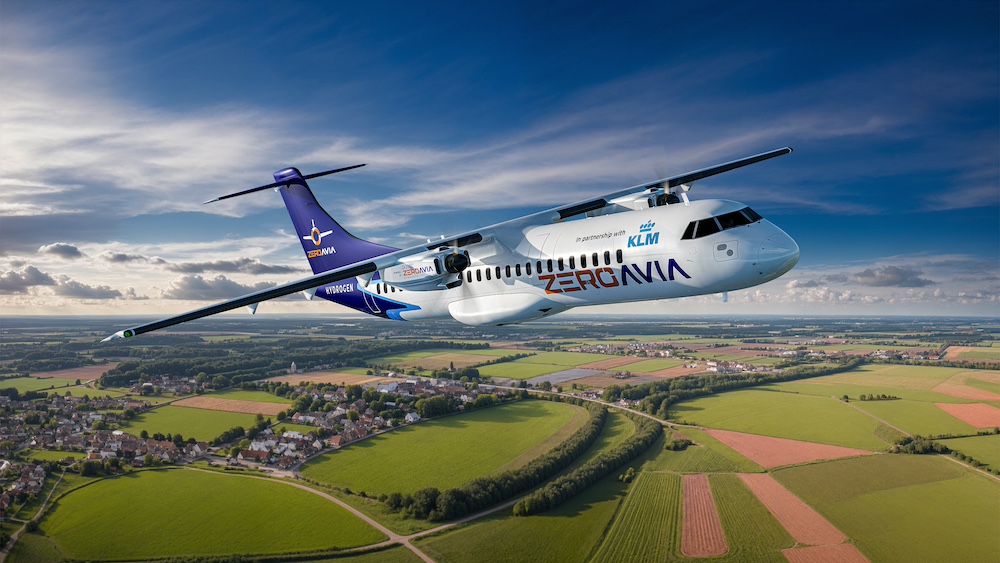
KLM Royal Dutch Airlines and ZeroAvia will work towards a demonstration flight using ZeroAvia’s ZA2000 zero-emission, hydrogen-electric engines for large regional turboprop.
Follow Aeronews on Facebook, Twitter, LinkedIn and TikTok
Hydrogen-electric engines use hydrogen in fuel cells to generate electricity, which is then used to power electric motors to turn the aircraft’s propellers. The only emission is low-temperature water vapor, with studies therefore estimating an up to90% reduction in climate impact when compared with typical kerosene-fueled flights.
As a first major target milestone, the companies aim to conduct an initial A-to-B flight demonstration between two airport locations in 2026. As well as identifying the optimal airport pair, immediate work streams will be working towards regulatory permits to fly and ensuring supply of liquid hydrogen fuel and putting in place the supporting infrastructure for aircraft fueling.
With this collaboration, KLM and ZeroAvia are providing the evidence-base for adoption of cleaner flight on KLM’s network. Furthermore, the demonstration project will accelerate the development of concepts of operations for hydrogen aircraft across the EU.
ZeroAvia has already extensively tested a prototype of its first ZA600-engine aboard a Dornier 228 aircraft at its UK base. The company has also performed advanced ground tests in the US and UK for the key building block technologies for the ZA2000 system, including cryogenic tanks or LH2 and proprietary high-temperature PEM fuel cell and electric propulsion systems. ZA2000 will support up to 80 seat regional turboprop aircraft such as the ATR72 or the Dash 8 400.