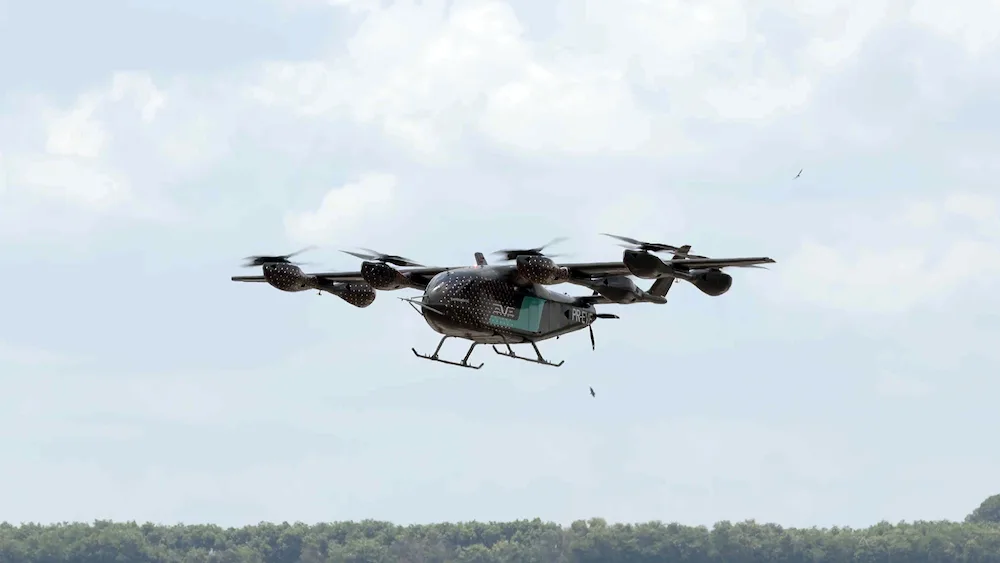
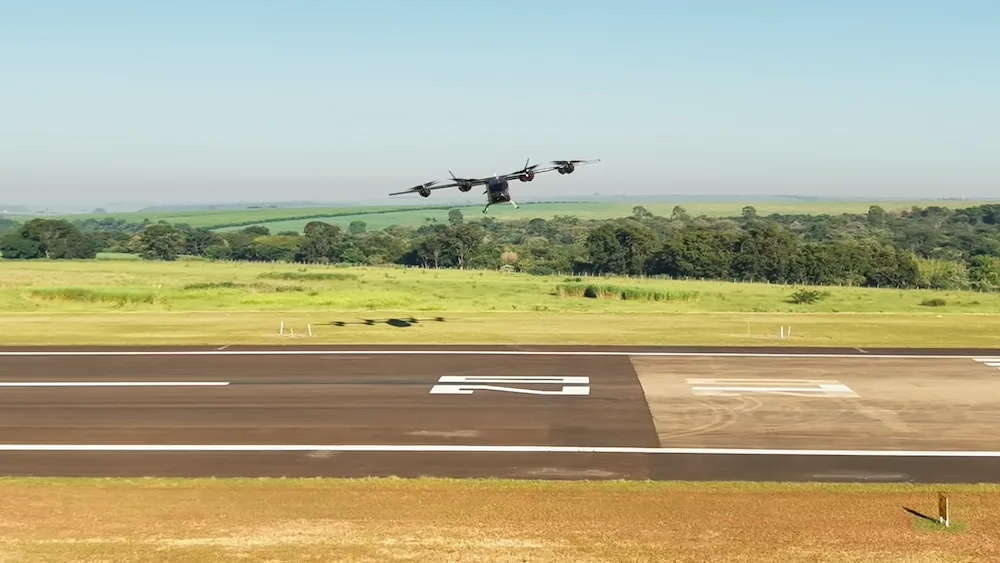
Eve Air Mobility announces the successful closeout of the hover and low‑speed flights block in the flight test campaign of its full‑scale engineering prototype.
Follow Aeronews on Facebook, Twitter, LinkedIn and TikTok
The milestone reflects Eve’s disciplined building-block approach, which expands the flight envelope step‑by‑step and validates models, control laws and aircraft behavior against real‑world data before moving into more complex tests. Each completed block strengthens the technical foundation for the next, tightening the correlation between simulation predictions and flight behavior.
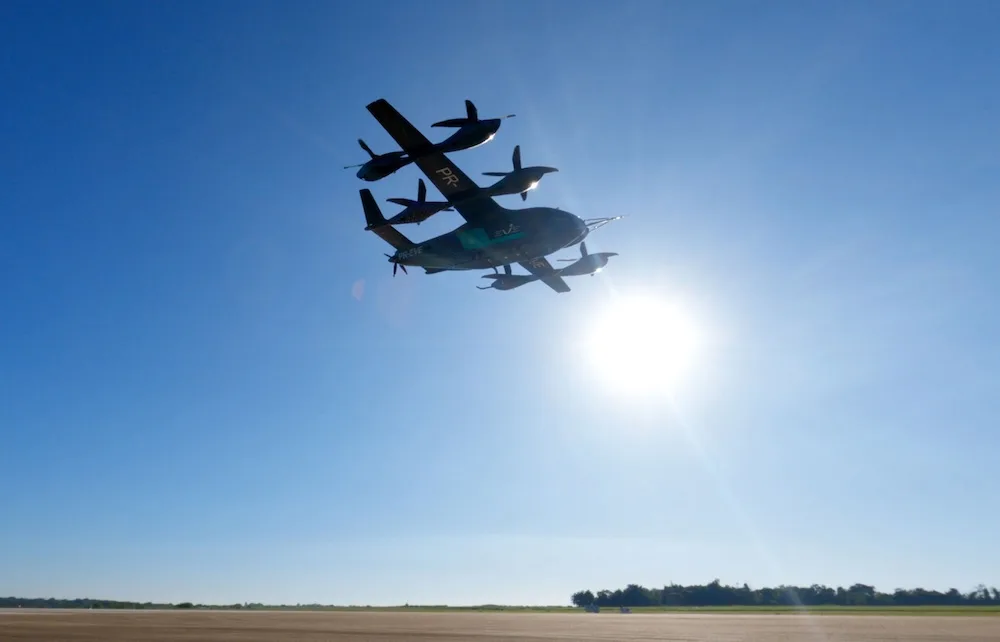
In this phase, the aircraft demonstrated stable hover performance and predictable handling through progressively more demanding maneuvers. The team first completed the low‑speed input phase below 15 knots, executing activities to validate control laws, downwash effects, thermal behavior and the propulsion model. As testing progressed, operations expanded to approximately 20 knots of ground speed (vehicle speed), including simultaneous four‑axis maneuvers to further validate aerodynamic and load models, supporting progression to higher speeds, a broader envelope and larger control deflections.
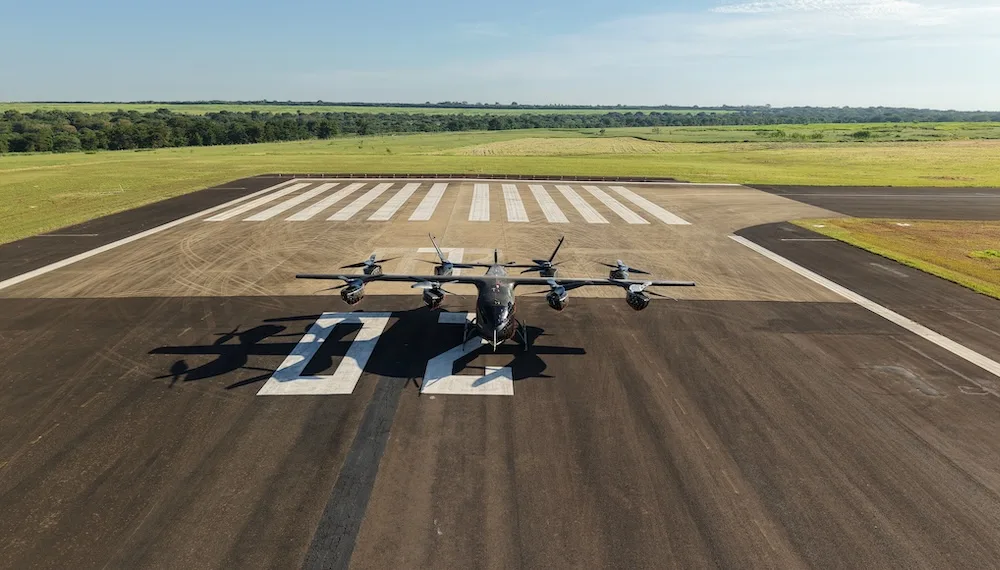
Notable milestones from this phase include the execution of more than 100 flight test points and the first demonstrations of autoland and the simplified fly-by-wire mode, a secondary layer of the fly-by-wire system that is activated when the normal mode is unavailable. The aircraft also reached 215 feet above ground level (AGL) and flew for 3 minutes and 48 seconds. Throughout testing, the aircraft showed consistent behavior under simultaneous four‑axis inputs. Recorded noise levels remained in line with expectations, while propulsion and battery performance were better than anticipated.
Over the coming weeks, Eve’s engineering prototype will conduct planned ground tests in preparation for the transition flights block, expected to begin in summer 2026 (July/August). The transition phase is designed to further strengthen the development of the final aircraft by expanding the envelope and validating performance as the program advances toward wingborne flight.