
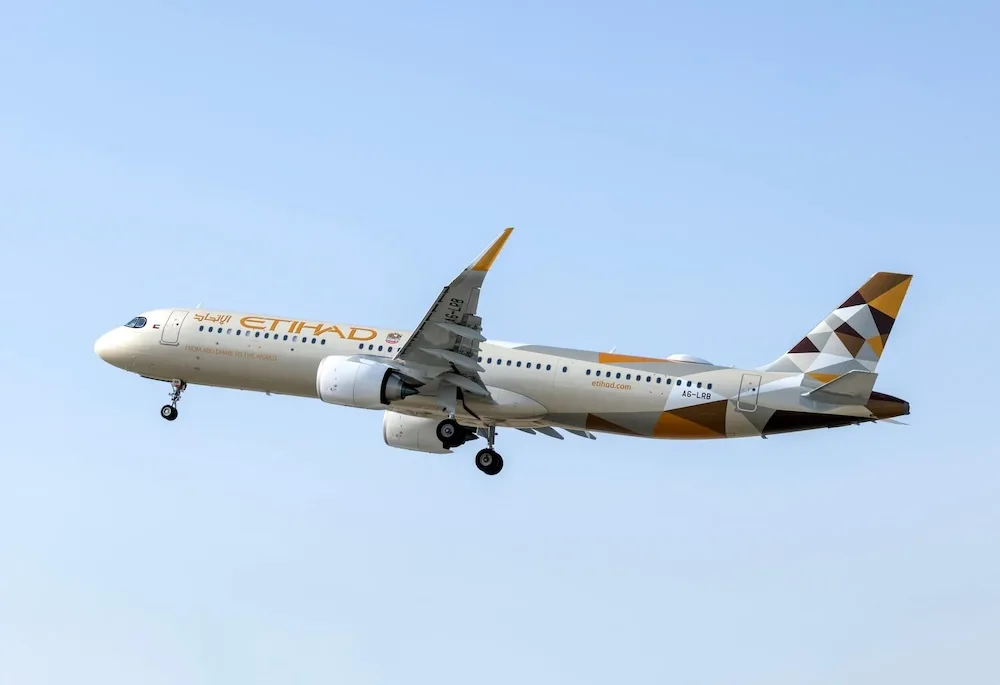
Etihad Airways has reached a new milestone in its growth story, now operating 300 scheduled passenger flights per day. This achievement is underpinned by strong growth in 2025, highlighted by an over 20% year-on-year increase in daily flights.
Follow Aeronews on Facebook, Twitter, LinkedIn, Bluesky and TikTok
All 300 daily flights are scheduled passenger services, underscoring Etihad’s role in connecting people and cultures while advancing Abu Dhabi’s position as one of the world’s most connected and accessible cities.
Etihad’s growth extends across its operations, network, and guest experience. In September 2025, the airline carried 1.9 million passengers, a 21% increase compared with the same month last year, maintaining a strong 89% passenger load factor. In the first nine months of 2025, Etihad has flown 16.1 million passengers, up 18% year-on-year, demonstrating sustained demand and effective network deployment.
Network and fleet expansion
The 300 daily flights milestone has been driven by one of Etihad’s most ambitious years of expansion. In September, the airline’s network capacity rose by 25% year-on-year, supported by fleet growth and a series of new route launches across key markets. The airline has launched or announced 31 new destinations in 2025, including Medan (Sumatra), Phnom Penh (Cambodia), Addis Ababa (Ethiopia) and Krabi (Thailand), bringing its global network to nearly 90 destinations. Europe has been a key growth market, with flights across the continent up 35% this summer compared with last year.
Etihad’s operating fleet has grown to 115 aircraft, up from 96 in September 2024, reflecting one of the airline’s strongest years of expansion. This growth includes new A350s, 787 Dreamliners, the return of 2 additional A380s, and the airline’s new A321LRs, featuring private First Suites and lie-flat Business Class seats.
Etihad’s growth has been supported by its home at Zayed International Airport (ZIA), which provides the efficiency and modern infrastructure needed to support the airline’s expanding operations. With capacity for 45 million passengers a year and 65 gates, the airport’s advanced biometric systems and streamlined processes allow guests to move from kerb to gate in as little as 12 minutes.