
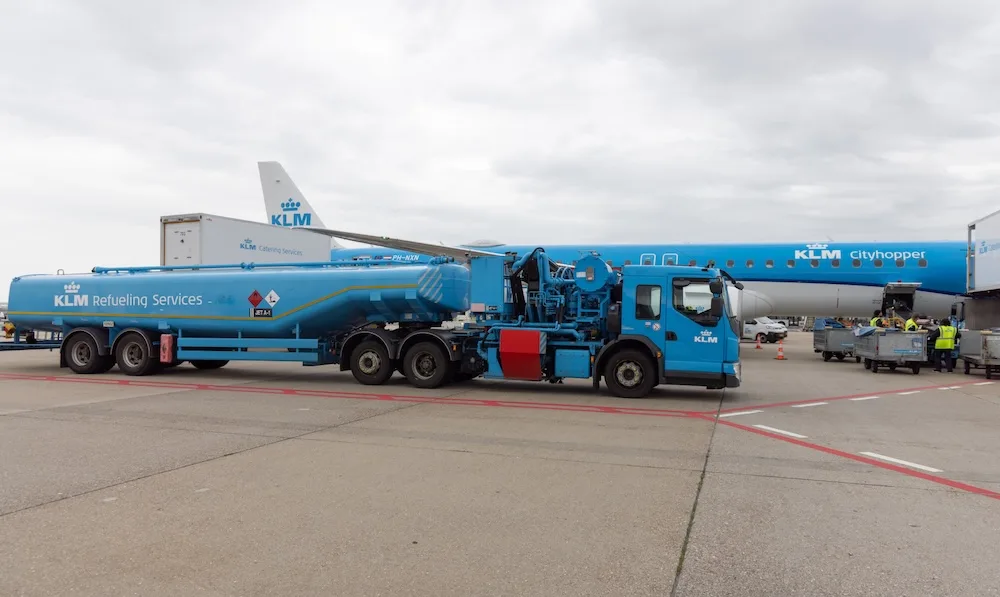
On June 9th, KLM Cityhopper operated – in collaboration with INERATEC, MB Energy, and Hamburg Airport – a passenger flight between Amsterdam and Hamburg using a 5% blend of synthetic kerosene (e-SAF).
Follow Aeronews on Facebook, Twitter, LinkedIn and TikTok
This is the first passenger flight to Germany using this fuel. With this, KLM once again demonstrates that flying on e-SAF is technically possible, despite the current challenges surrounding scalability and availability.
The synthetic kerosene was produced by INERATEC, blended with fossil kerosene by MB Energy, and refueled into the aircraft at Schiphol Airport. Synthetic sustainable aviation fuel is made using renewable electricity, CO₂, and water, and can reduce lifecycle emissions by more than 90% compared to fossil kerosene.
KLM already pioneered this in 2021 by operating the first commercial flight using synthetic kerosene to Madrid. Whereas 500 liters of e-SAF could be blended then, only 200 liters are being used now. This shows how great the challenge is: the availability of e-SAF still lags far behind ambitions. Today, only a fraction of the e-SAF mandate imposed by Europe for 2030 is actually in production. Making e-SAF widely available and affordable on a large scale remains, alongside SAF, a major challenge.
Alternative fuels as a priority
KLM supports the European mandate for the use of alternative fuels and will continue to invest in making aviation more sustainable. At the same time, current e-SAF production figures show that the European sub-target of a 1.2% e-SAF blend by 2030 is a major challenge.
In addition to the fact that e-SAF is currently four times more expensive than SAF (around eight times more expensive than conventional kerosene), there is as yet no e-SAF production on a large scale. The process of obtaining construction and environmental permits in Europe also plays a role, as does uncertainty over possible changes to ReFuelEU legislation. It therefore remains crucial for governments across Europe to commit and invest in accelerating and scaling up alternative aviation fuels, both SAF and e-SAF.