
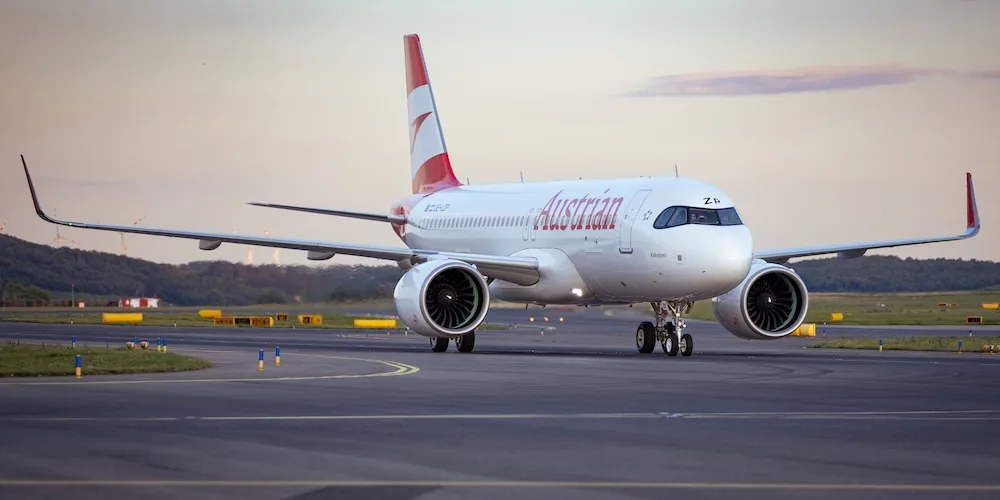
Futuristic headsets equipped with comprehensive content that recreates various flight scenarios of the Airbus A320 fleet for training purposes. For several weeks now, Austrian Airlines has been intensively training with VR headsets.
Follow Aeronews on Facebook, Twitter, LinkedIn, Bluesky and TikTok
From the initial idea to becoming a joint project between Airbus, Lufthansa Aviation Training and Austrian at the end of 2022, with continuous testing and development, through to full integration into the training program by the end of 2025, VR headsets have now firmly arrived at Austrian Airlines.
During the development and academic testing phases, a core team of experts from LAT, Austrian Airlines and other Lufthansa Group airlines, together with a test group of 20 pilots primarily from Austrian Airlines, optimised both content and handling of the headsets, focusing particularly on operational, technical and regulatory feasibility and enhancement.
“With the latest generation of VR headsets, we now have a powerful tool that provides our colleagues with an ideal complement to their training and learning path for a career on the Airbus A320,” says Michael Kircher, Head of Training at Austrian Airlines, enthusiastically.
Before pilots begin training with the Meta Quest 3 headsets, however, they must first complete a comprehensive, coordinated self-study lessons (SSL) program. “Around one week before the actual VR training begins, pilots start with the SSL phase. This is followed by three virtual training sessions of 180 minutes each, creating an intensive and holistic learning experience—especially since training always takes place in pairs,” explains Kircher.
The VR headsets are used in the initial phase of the Airbus A320 type rating, bridging the transition from theoretical instruction to practical training, including the respective flight phases. Kircher sees considerable development potential, particularly in continuously enhancing the program and expanding it to include non-normal operations as well as additional use cases and aircraft types in the future.