
Released on July 11th (the crash happened in Ahmedabad on June 12th), the report has been prepared based on the preliminary facts and evidence collected during the investigation. The information is preliminary and subject to change.
The full report can be accessed here. Most important takeaways:
On 12th June 2025, Air India’s B787-8 aircraft bearing registration VT-ANB arrived at Ahmedabad airport operating flight AI423 from Delhi. The aircraft touched down at 05:47 UTC (11:17 IST) and was parked at the bay 34.
The crew of the previous flight (AI423) had made Pilot Defect Report (PDR) entry for status message “STAB POS XDCR” in the Tech Log. The troubleshooting was carried out as per FIM by Air India’s on duty AME, and the aircraft was released for flight at 0640 UTC.
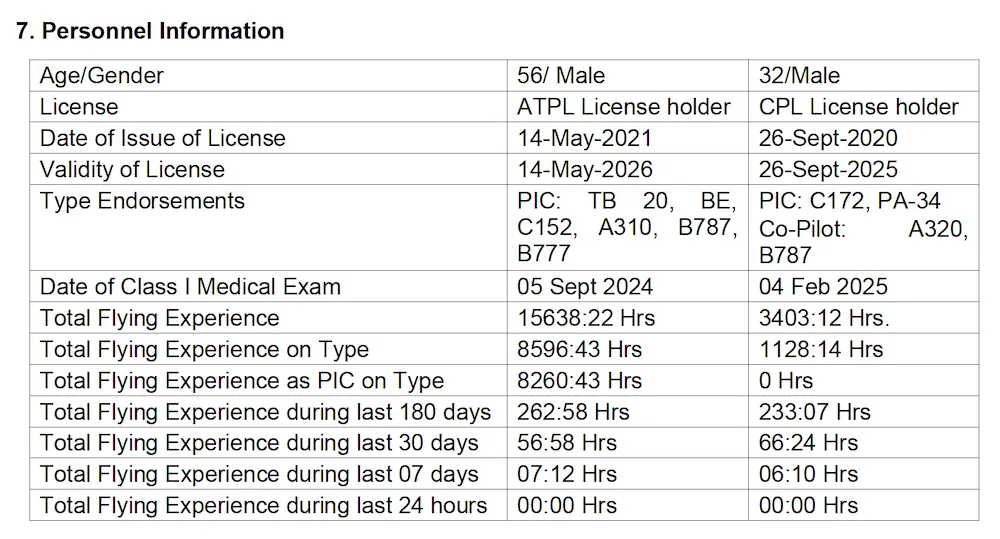
The aircraft was scheduled to operate flight AI171 from Ahmedabad to Gatwick with ETD 07:40 UTC (13:10 IST). The flight was to be operated by the flight crew comprising an ATPL holder PIC, a CPL holder Co-pilot along with ten cabin crew. Both pilots were based at Mumbai and had arrived at Ahmedabad on the previous day. They had adequate rest period prior to operating the said flight. The co-pilot was Pilot Flying (PF), and the PIC was Pilot Monitoring (PM) for the flight.
The crew of flight AI171 arrived at the airport and underwent preflight Breath Analyzer test at 06:25 UTC and were found fit to operate the flight. The crew is seen arriving at the boarding gate in the CCTV recording at about 07:05 UTC (12:35 IST).
There were 230 passengers on board, out of which 15 passengers were in business class and 215 passengers were in economy class including two infants.
Fuel on board was 54,200 Kgs and as per the load and trim sheet of the flight, the Take-off Weight was 2,13,401 Kgs (Max. allowed – 2,18,183 Kgs). The take-off weight was within allowable limits for the given conditions. There was no ‘Dangerous Goods’ on the aircraft.
As per the EAFR data, the aircraft crossed the take-off decision speed V1 and achieved 153 kts IAS at 08:08:33 UTC. The Vr speed (155 kts) was achieved as per the EAFR at 08:08:35 UTC. The aircraft air/ground sensors transitioned to air mode, consistent with liftoff at 08:08:39 UTC.
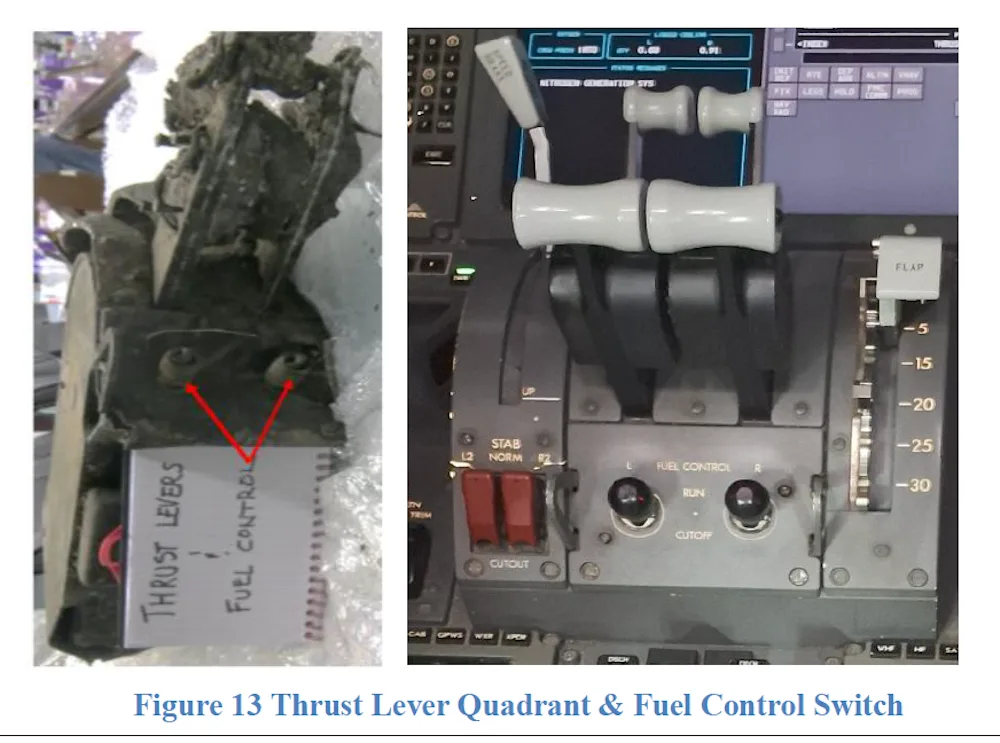
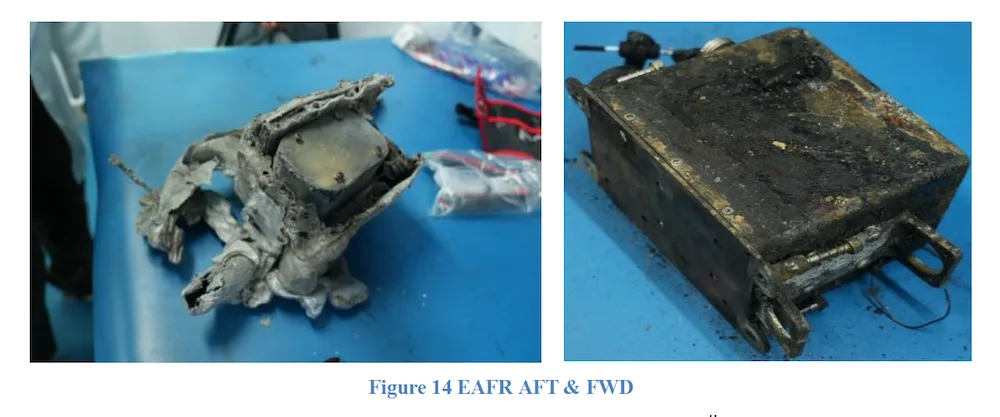 The aircraft achieved the maximum recorded airspeed of 180 Knots IAS at about 08:08:42 UTC and immediately thereafter, the Engine 1 and Engine 2 fuel cutoff switches transitioned from RUN to CUTOFF position one after another with a time gap of 01 sec. The Engine N1 and N2 began to decrease from their take-off values as the fuel supply to the engines was cut off.
In the cockpit voice recording, one of the pilots is heard asking the other why did he cutoff. The other pilot responded that he did not do so.
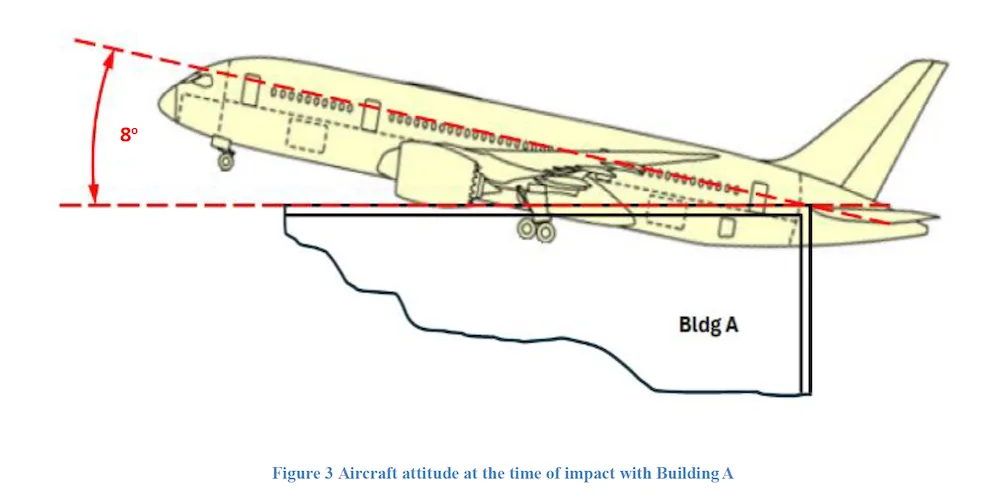
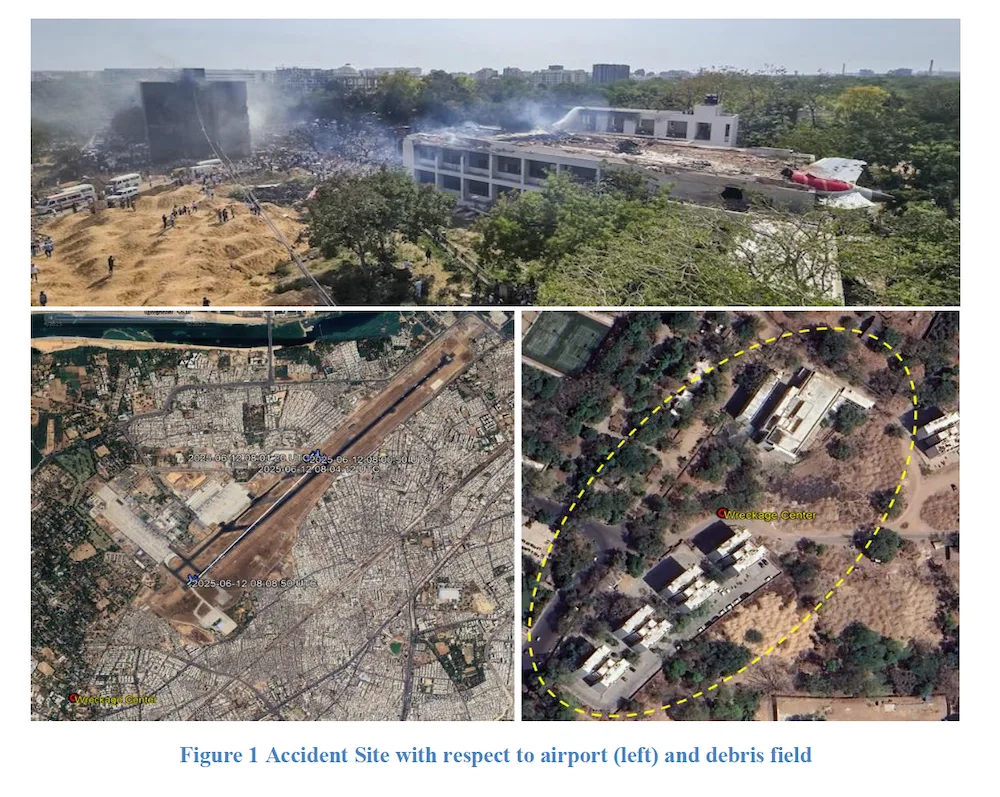
The CCTV footage obtained from the airport showed Ram Air Turbine (RAT) getting deployed during the initial climb immediately after lift-off (fig. 15). No significant bird activity is observed in the vicinity of the flight path. The aircraft started to lose altitude before crossing the airport perimeter wall.
As per the EAFR data both engines N2 values passed below minimum idle speed, and the RAT hydraulic pump began supplying hydraulic power at about 08:08:47 UTC.
As per the EAFR, the Engine 1 fuel cutoff switch transitioned from CUTOFF to RUN at about 08:08:52 UTC. The APU Inlet Door began opening at about 08:08:54 UTC, consistent with the APU Auto Start logic. Thereafter at 08:08:56 UTC the Engine 2 fuel cutoff switch also transitions from CUTOFF to RUN. When fuel control switches are moved from CUTOFF to RUN while the aircraft is inflight, each engines full authority dual engine control (FADEC) automatically manages a relight and thrust recovery sequence of ignition and fuel introduction.
The EGT was observed to be rising for both engines indicating relight. Engine 1’s core deceleration stopped, reversed and started to progress to recovery. Engine 2 was able to relight but could not arrest core speed deceleration and re-introduced fuel repeatedly to increase core speed acceleration and recovery. The EAFR recording stopped at 08:09:11 UTC
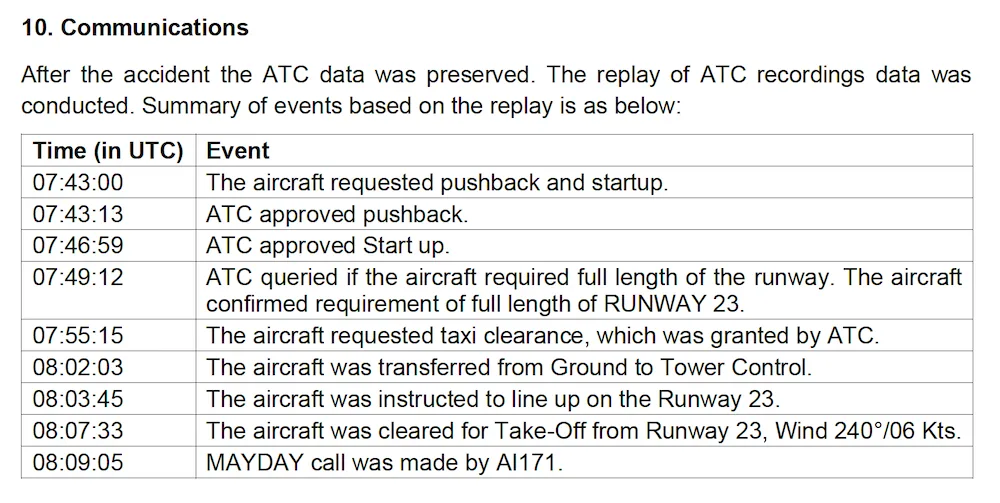
At about 08:09:05 UTC, one of the pilots transmitted “MAYDAY MAYDAY MAYDAY”. The ATCO enquired about the call sign. ATCO did not get any response but observed the aircraft crashing outside the airport boundary and activated the emergency response.
At 08:14:44 UTC, Crash Fire Tender left the airport premises for Rescue and firefighting. They were joined by Fire and Rescue services of Local Administration.
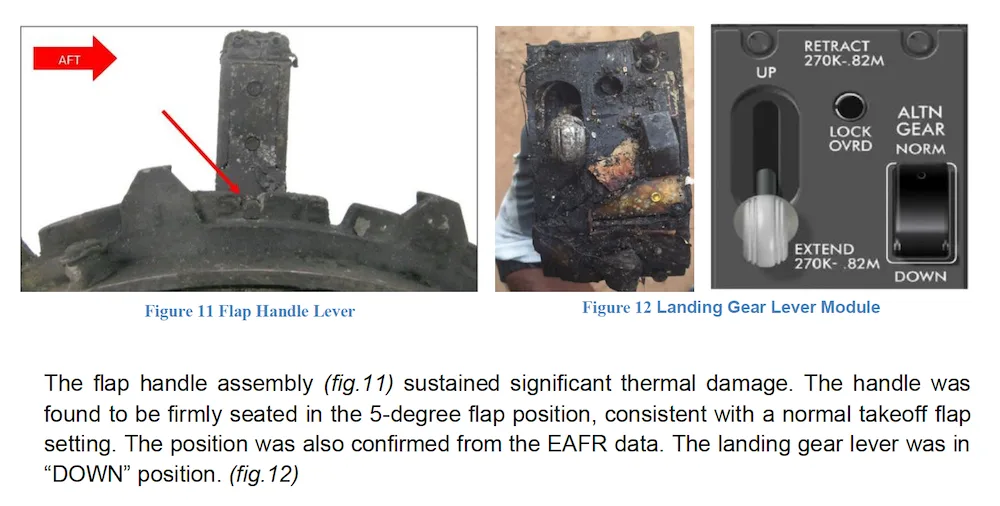
The flap handle assembly (fig.11) sustained significant thermal damage. The handle was found to be firmly seated in the 5-degree flap position, consistent with a normal takeoff flap setting. The position was also confirmed from the EAFR data. The landing gear lever was in “DOWN” position.