
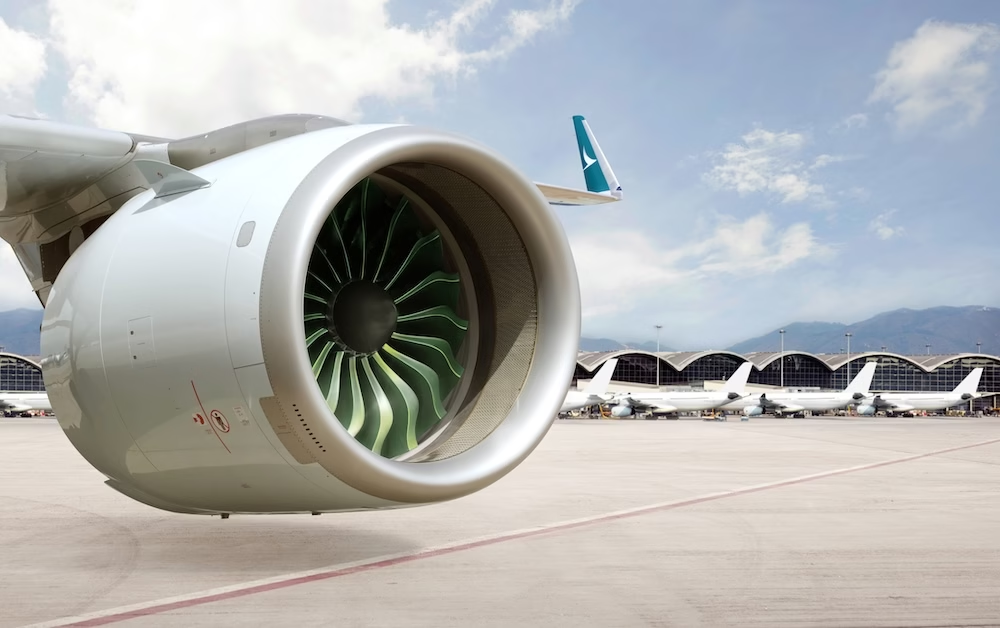
Cathay Pacific has entered into an agreement with China Petroleum & Chemical Corporation (Sinopec) to refuel some of its flights departing from Hong Kong with sustainable aviation fuel (SAF) produced and blended with conventional aviation fuel by Sinopec.
Follow Aeronews on Facebook, Twitter, LinkedIn, Bluesky and TikTok
The airline uplifted a batch of SAF produced by the Sinopec Zhenhai Refining & Chemical Company (ZRCC) at Hong Kong International Airport in April. ZRCC is one of the leading SAF manufacturers in Asia to independently develop bio-jet fuel technology. This batch of SAF was converted from used cooking oil using the hydrotreated esters and fatty acids (HEFA) pathway. As part of the first batch of SAF exported by ZRCC to Hong Kong, it has been certified by International Sustainability and Carbon Certification (ISCC) that it can reduce the lifecycle carbon emissions by about 80%, compared with conventional jet fuel.
SAF is an alternative aviation fuel produced from waste materials or other non-fossil carbon sources. As demonstrated by this batch, SAF has the potential to significantly lower its lifecycle carbon emissions as compared with fossil fuels, helping address the environmental impact of passenger and cargo air transport. This agreement with Sinopec demonstrates the potential for further cooperation between the Chinese Mainland and Hong Kong in the SAF supply chain.
In recent years, the production and adoption of SAF has gained momentum across Asia. Cathay Pacific is working closely with different partners with the aim to expand the use of SAF in Asia. In March 2025, Cathay Pacific reached an agreement with fuel supplier SK Energy, which will supply SAF to Cathay Pacific from 2025 to 2027 in South Korea. At the same time, Cathay Pacific will continue to draw on its own experience to support Hong Kong to scale up SAF usage with supportive policy, in order to further strengthen Hong Kong International Airport’s status as a leading international aviation hub.